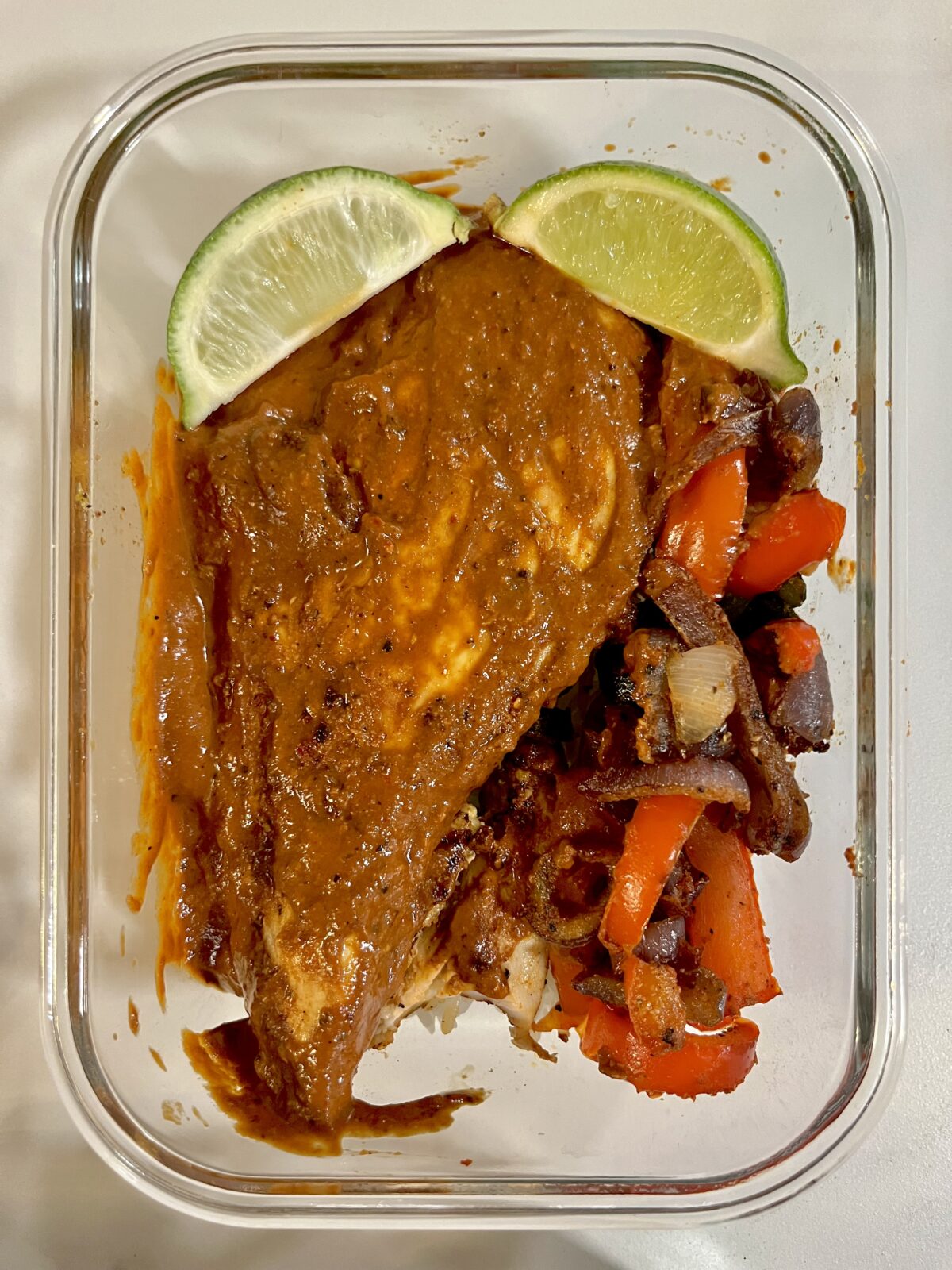
Shop the overlap, season separately
Each batch uses 2 lb chicken and 1 cup dry jasmine rice for four meals. Teriyaki uses thighs; the other three use breast. If cooking two batches, that is 2 cups dry rice total, not 2 cups cooked. Cook it using your package or appliance directions, divide it between the recipes, then add each recipe's vinegar or lime seasoning separately.
Make room for the actual cooking
Orange chicken and mole need a roasting tray for their vegetables as well as a skillet. Teriyaki uses a refrigerated marinade and a separate finishing sauce. Chipotle needs time for salsa and topping cups. Listed times describe individual recipes with overlapping tasks, not one shared cooking session. Use a thermometer to check chicken reaches 165°F.
Keep fresh toppings out of the microwave
Pack chipotle salsa, lettuce and lime separately, and remove them before reheating the rice, beans, chicken and cheese. Add optional green onions or sesame seeds to orange chicken after heating. Reserve clean sauce before raw-chicken contact; do not pour a used marinade onto a finished bowl.
Check sauces and substitutions
These meals are not low-sodium choices. Soy and teriyaki sauces, seasoning salt and cheese contribute sodium; reduced-sodium wording on an ingredient does not make the whole meal low sodium. Check the full recipe label and your packaged products. Different sauces, chicken cuts, extra oil or omitted cheese change the estimates. Historical ingredient-use costs are not current shelf prices or full-package shopping totals.
Pack safely for later. Refrigerate cooked food in shallow containers within 2 hours, or 1 hour above 90°F. Keep the fridge at 40°F or below and use leftovers within 3-4 days; freeze later portions promptly. Reheat leftovers to 165°F throughout. Follow the recipe’s cooking instructions and check the
safe cooking temperatures.
USDA leftover guidance.