
Rice and crunchy vegetables
Ginger-Sesame Shrimp Stir Fry includes broccoli, bell pepper, and carrots over jasmine rice. Its sauce uses soy sauce, honey, ginger, and sesame oil.
Find your next meal prep
Compare three shrimp meal preps with rice or pasta: ginger-sesame stir-fry, Cajun spinach pasta, and garlic-butter mac and cheese.

A shorter list, with a reason for every pick
One bag of raw shrimp can take dinner in very different directions. Start with a vegetable-filled rice bowl, a Cajun pasta with spinach, or a creamy garlic-butter mac. Each recipe makes four servings, so you can choose the sauce and side you want to repeat.
How we chose: Three selected four-serving recipes with raw shrimp and at least 50g protein per listed serving. All three publish 30-minute totals; those estimates rely on overlapping pasta or rice cooking with the other steps. Pan size, shrimp size, and equipment affect elapsed time.
Ginger-Sesame Shrimp Stir Fry includes broccoli, bell pepper, and carrots over jasmine rice. Its sauce uses soy sauce, honey, ginger, and sesame oil.
Cajun Shrimp Pasta combines penne, spinach, half-and-half, and Parmesan. The written spice blend includes cayenne; adjust it if you prefer less heat.
Garlic Butter Shrimp Mac & Cheese uses penne with low-fat cream cheese, skim milk, nonfat cheddar, and nonfat Greek yogurt. Those specific dairy ingredients matter to the displayed estimates.
| Recipe | Protein | Calories | Cost est. | Listed time |
|---|---|---|---|---|
| Cajun Shrimp Pasta | 60.9g | 578 | $5.38 | 30 min |
| Garlic Butter Shrimp Mac & Cheese | 64.8g | 615 | $5.75 | 30 min |
| Ginger Sesame Shrimp Stir Fry | 53.3g | 485 | $5.62 | 30 min |
Pick a flavor, then open the full recipe
01 · Cajun pasta with spinach
A half-and-half and Parmesan sauce brings spinach and seasoned shrimp together with penne. This is the option for a creamy pasta with a cayenne kick.
Before you cook: Reserve pasta water before draining. Remove the cooked shrimp while making the sauce, then return it with the pasta after the spinach wilts.
Get the recipe →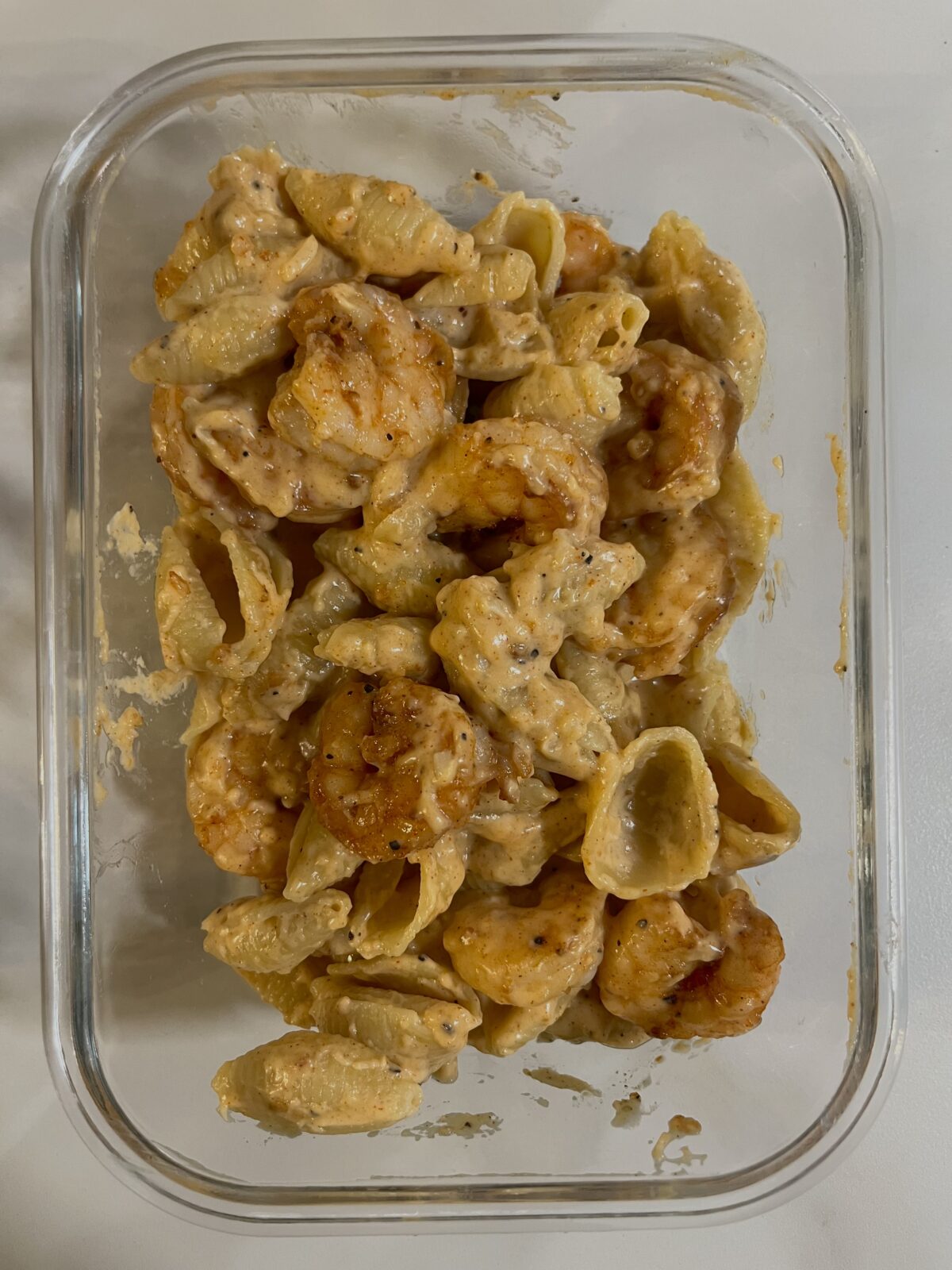
02 · Garlic-butter comfort
Penne gets a creamy sauce from low-fat cream cheese, skim milk, nonfat cheddar, and nonfat Greek yogurt, with seasoned shrimp on top or folded through.
Before you cook: Use the listed dairy ingredients for the published estimate. Lower the heat for the cheese sauce and stir until smooth; lemon zest is optional.
Get the recipe →
03 · Rice bowl with three vegetables
Broccoli, bell pepper, and carrots make this the vegetable-heavy choice. Fresh ginger, garlic, soy sauce, and sesame oil flavor the sauce.
Before you cook: Start the rice first, mix the cornstarch slurry in a separate cup, and remove the cooked shrimp while stir-frying the vegetables. Return it after the sauce thickens.
Get the recipe →Make the batch work for you
Bring pasta water to a boil or start the rice cooker while measuring the sauce ingredients. The two pasta recipes each use 8 oz of dry penne; the stir-fry uses 1 cup of dry jasmine rice.
Each recipe cooks the shrimp separately before combining it with the finished base. Work in batches when needed and avoid leaving the shrimp over the heat throughout the vegetable or cheese-sauce steps.
All three recipes start with 2 lb of raw peeled and deveined shrimp. The stir-fry calls for an unmeasured light spray of cooking oil; that extra spray is not quantified in its estimate. Whole-package prices can exceed the ingredient-use costs shown here.
Compare the same serving, then make it yours
Protein and calories come from the current recipe labels and describe one listed serving. Brands, portions, and substitutions change the values. The totals include the recipe’s sides and sauces. These selections have at least 50g of protein per listed serving.
Times come from each recipe, rather than a separate timed cooking test. Prep speed, appliance preheating, pan size, and cooking in batches can change the time you need. Read the full recipe before you start.
Costs allocate the amount of each ingredient used, rather than every full package you buy. Optional ingredients and exclusions follow each recipe’s cost breakdown. Taxes, delivery, and membership fees are excluded; local prices and a first pantry shop can cost more.
These recipes’ cost records were checked September 21, 2026. Formula updates can retain earlier price observations. Open a recipe for its ingredient-level price sources and dates.
Reviewed October 13, 2026 · Selection and prep notes are based on the linked recipe ingredients and instructions · Cost methodology · Nutrition methodology