What dairy-free means here
The ingredient lists and cooking directions for these two recipes contain no milk ingredients as written. Neither needs cheese, butter, yogurt or whey powder. Use plain meat, rice and vegetables; check the labels on Dijon, seasonings, vinegar and cooking spray rather than assuming every flavored product is interchangeable.
For a milk allergy, check ingredient and allergen statements each time you shop, including milk, whey and casein, and ask the manufacturer about cross-contact when needed. Lactose-free dairy still contains milk proteins. This plan is not an allergen-free certification.
The regular meal-plan library includes smoothies and snacks that may contain dairy. Those extras are not included here, and this page does not load a regular template into your planner. For more meal ideas, browse the dairy-free recipe archive.
Cook each recipe once, divide each into four

Four lunches
60.4g protein$3.07 / serving est.165 min
Chicken, roasted broccoli and jasmine rice. Use the skillet or air fryer for the chicken while the vegetables roast.
Per serving: 593 calories, 60.4 g protein and 6.4 g fiber, including the recipe’s rice and vegetables.
The card’s 165 minutes includes a 2-hour marinade allowance; the directions allow 15 minutes to 12 hours. See the prep order below.
Get the recipe →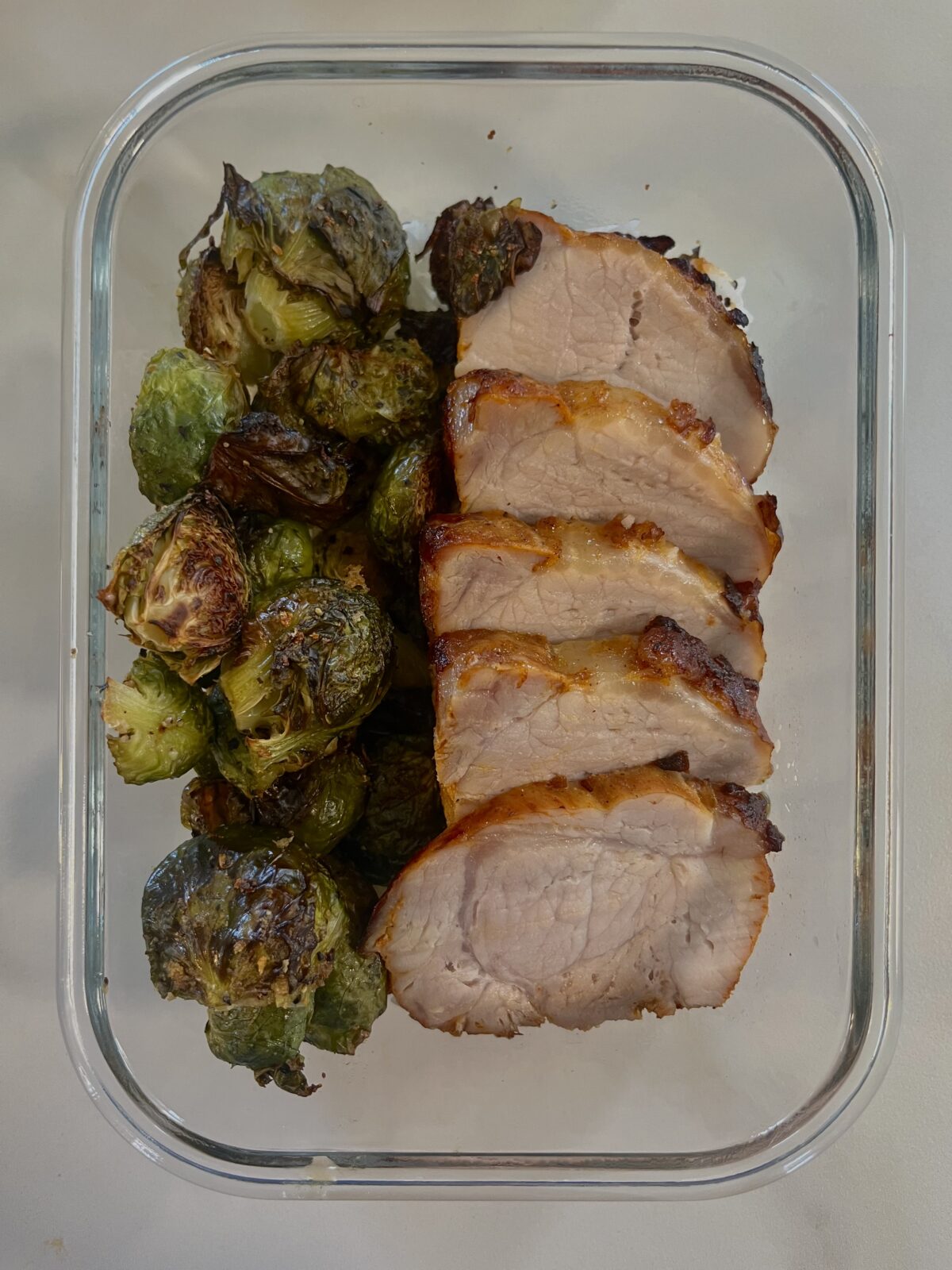
Four dinners
56.4g protein$3.61 / serving est.105 min
Pork tenderloin, Brussels sprouts and white rice. Leave room around the sprouts so the cut sides can brown.
Per serving: 577 calories, 56.4 g protein and 7.6 g fiber, including the recipe’s rice and vegetables.
The card’s 105 minutes includes a 1-hour marinade allowance. The directions also call for a 5-10-minute rest after roasting.
Get the recipe →One serving of each provides 1,170 calories and 116.8 g protein across lunch and dinner. All eight portions total 4,680 calories and 467.2 g protein. These are estimates for the listed foods only, not full-day totals.
Nutrition follows the current recipe estimates and their existing marinade assumptions. Different products or portions change the numbers. Neither meal is presented as low sodium.
Four lunches and four dinners
Prep on Sunday for Monday through Thursday. Each meal below is one-quarter of its recipe, with no added smoothie or snack.
One person, one serving per meal| Day | Lunch | Dinner |
|---|
| Monday | Balsamic Herb Chicken · 1 serving | Balsamic Dijon Herb Pork Tenderloin · 1 serving |
|---|
| Tuesday | Balsamic Herb Chicken · 1 serving | Balsamic Dijon Herb Pork Tenderloin · 1 serving |
|---|
| Wednesday | Balsamic Herb Chicken · 1 serving | Balsamic Dijon Herb Pork Tenderloin · 1 serving |
|---|
| Thursday | Balsamic Herb Chicken · 1 serving | Balsamic Dijon Herb Pork Tenderloin · 1 serving |
|---|
Breakfast and snacks remain open every day. Friday, Saturday and Sunday meals are also open. For two people, these same batches cover two days; double both original recipes if you want four days for two.
Shop the overlap, keep the recipe quantities
The two batches use 2 lb raw boneless, skinless chicken breast, 2 lb pork tenderloin, 1½ lb broccoli and 1½ lb Brussels sprouts. Keep the rice choices as written: 1 cup dry jasmine rice for the chicken and 1 cup dry white rice for the pork. Those are dry amounts, not cooked cups.
Shared staples total ¾ cup balsamic vinegar, ¼ cup Dijon mustard, 3 tablespoons olive oil plus 1 teaspoon olive oil spray, 2 tablespoons rice vinegar and 2½ tablespoons garlic powder. Check your pantry for salt and pepper, then add the chicken’s Italian seasoning, onion powder and optional crushed red pepper, plus the pork’s rosemary and fresh garlic. Use the linked recipe cards for the complete quantities and split uses.
The historical ingredient-use estimate for both batches is $26.73, covering all eight portions. The source price observations are from September 21, 2026. This is a partial food budget: breakfasts, snacks, drinks, other meals, extra sides and full-package purchases are excluded. Your checkout total and current prices will differ.
A practical Sunday cooking order
- Marinate the meats separately in covered containers in the refrigerator. The chicken directions allow at least 15 minutes, up to 12 hours; pork allows 30-60 minutes or overnight. Do not reuse marinade that touched raw meat as a finishing sauce.
- Start the rice according to each recipe and your cooker’s capacity. Prep the vegetables while it cooks. Both recipes use a 425°F oven, but leave space on the trays: work in rounds if your oven cannot hold the pork, sprouts and broccoli without crowding.
- Roast broccoli for about 20-25 minutes. Roast pork and sprouts for about 25-30 minutes; the pork needs to reach 145°F and rest for at least 3 minutes before slicing (the recipe suggests 5-10). An optional sear takes 2-3 minutes per side before roasting. Watch the sprouts’ loose leaves near the end.
- Cook the chicken separately in a skillet or air fryer as the recipe directs, in batches if needed. Check that it reaches 165°F with a food thermometer regardless of the method or timer. Divide each finished recipe evenly into four shallow containers.
The recipe-card totals are separate estimates, not a promise that both batches finish in one 30-minute session. Marinating, rice-cooker capacity, oven space, optional searing and the pork’s rest all affect elapsed time. This combined prep order has not been kitchen-tested.
Refrigerate or freeze promptly in shallow containers within 2 hours of cooking, or within 1 hour above 90°F. Keep the refrigerator at 40°F or below and use refrigerated leftovers within 3-4 days. For this Sunday prep, freeze both Wednesday and Thursday portions promptly on prep day rather than holding all eight meals in the fridge.
Move the next day’s frozen portions to the refrigerator to thaw. Reheat to 165°F throughout, stirring rice and vegetables and repositioning meat to avoid cold spots. A splash of water can help rice reheat; roasted vegetables will soften after chilling or freezing.
Food-safety references: safe cooking temperatures and safe cooling and reheating, plus the cold food storage chart.