← Explore recipes

The ingredient, put to work

Top sirloin. A plan for every ounce.

Know what to buy, how much goes into a batch, and how to turn it into lunches worth reheating. Start with the cut, then let the recipe do the rest.

22gprotein / 100 g raw
2 lbraw steak in either batch below
4servings in either recipe
Make sense of the meat case ↓

Nutrition is the library’s raw top-sirloin estimate. Retail cuts and trimming vary.

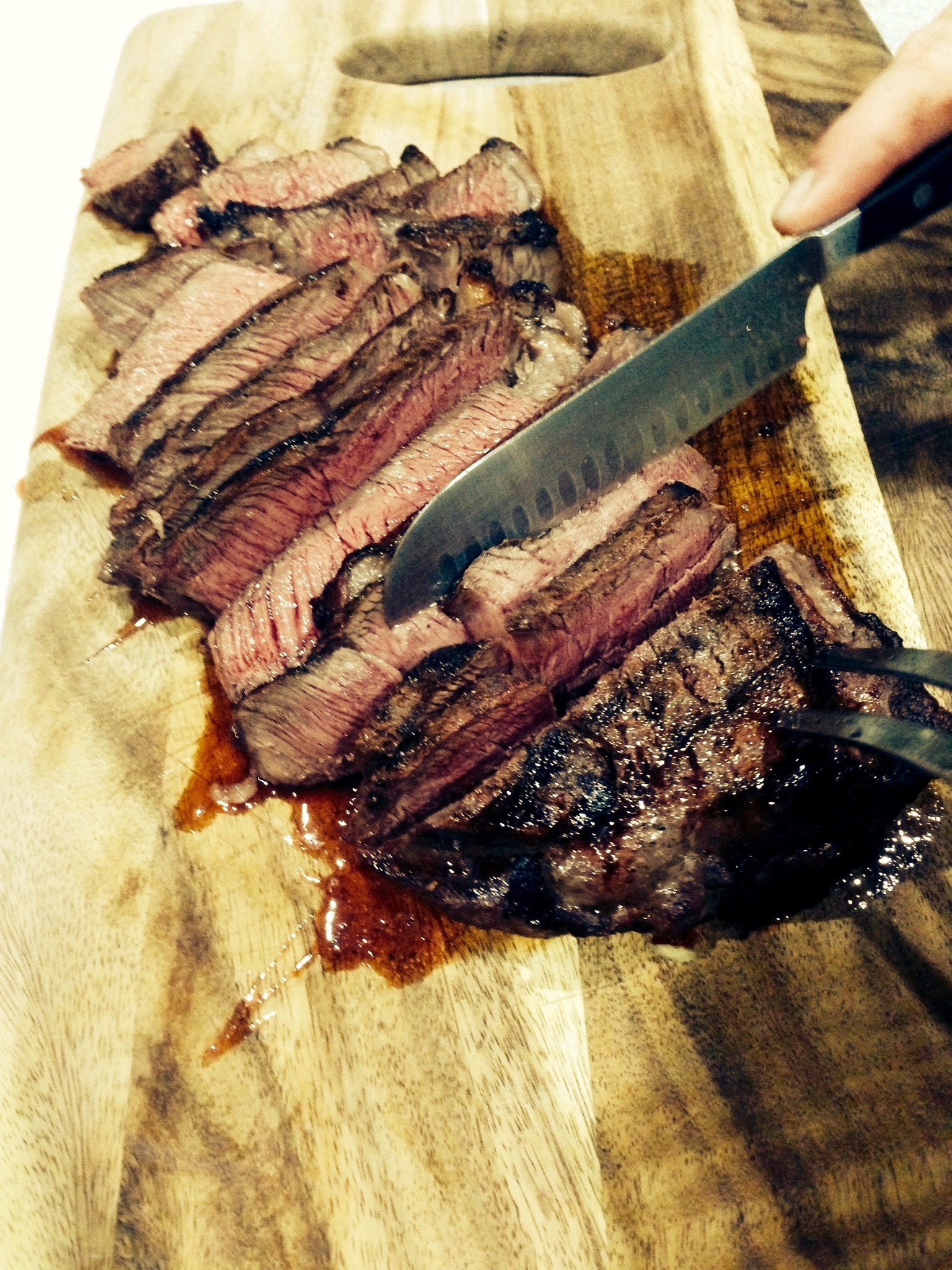
Cooked top sirloin sliced on a wooden cutting board
“Top sirloin” by Clay Junell (slopjop) · CC BY-SA 2.0. Original photo, shown uncropped.

The visual field guide

Get to know your steak.

First, read the cut name

Buy for the dish, not the biggest tray.

Top sirloin works well when you want steak strips or bites alongside rice, vegetables, or pasta. It fits the skillet-based recipes below. Look for boneless top sirloin on the label, then compare the unit price and the amount of meat you can use.

01

Check the actual cut

“Sirloin” alone can describe different products. Top sirloin, sirloin tip, and a cap steak with a fat cap are not identical. The Beef Checkoff cut guide identifies top sirloin and its skillet, grilling, and stir-fry uses.

02

Check usable weight

For these recipes, trim visible fat as directed and weigh the meat you will cook. A 2 lb purchase with substantial trim may leave less than 2 lb for the recipe. No fixed trim yield is assumed here.

03

Check the package

Choose intact, cold packaging without leaks. Pick up meat near the end of the shop, contain raw juices, and refrigerate promptly. Check the date and any mechanically tenderized cooking instructions. USDA buying and handling guidance.

Same weight, clearer comparison

The tray price is only half the story.

The two examples below show how to compare a variable-weight tray with a fixed package. They are dated public listings from different products and shopping contexts, so they do not establish which retailer is cheaper in your area. No local stock or checkout price has been verified.

U.S. dollars. Public listing examples checked October 5, 2026; confirm your selected store.
ReferenceListed pricePer 100 g purchased2 lb used*
WalmartChoice Angus top sirloin, variable-weight tray$12.94 / 1 lb$2.85$25.88
KrogerPrivate Selection Choice Angus top sirloin, 10 oz$10.99 / 10 oz$3.88$35.17

Walmart: shop by total weight

The library’s mapped product is a variable-weight tray. Add the actual weights until you have enough for your recipe; do not assume “one tray” means one pound. The listed per-pound price is more useful than an advertised average tray total. See the mapped Walmart product.

Public category listing; no local store selected for this comparison. The linked category listing supplied the price example; the product page did not expose a consistent price in this review.

Kroger: account for extra portions

For a 2 lb recipe, three 10 oz packs fall 2 oz short. Four packs provide 40 oz and would cost $43.96 at the observed price, with 8 oz left before trimming. Plan another meal or freeze the extra. See the mapped Kroger product.

Public listing displayed Ponce, Atlanta pickup context. The linked category listing supplied this package-price example.

*Ingredient-use cost is not your receipt. The 2 lb column allocates a price to 2 lb before trimming and does not round up packages. Taxes, shipping, fees, sales, and waste are excluded. Our existing recipe estimates use a separate BLS boneless Choice sirloin reference: $14.36 per lb, August 2026 U.S. city average, checked September 21. These retailer examples do not silently replace that baseline.

Weigh it at the right stage

Raw weight in. Recipe servings out.

What a batch means

Both recipes below call for 2 lb of sirloin and make four servings. That allocates 8 oz (about 227 g) of raw steak per serving before cooking, plus the recipe’s other ingredients. It is a recipe quantity, not a recommended serving size for everyone.

To divide the batch evenly, weigh the cooked steak after cooking and divide that actual weight by four. Its cooked weight will be lower than its starting weight because cooking changes moisture and fat. Do not weigh out 8 oz cooked and log it as 8 oz raw.

For a smaller meal, use the recipe’s serving controls and build the portion you want in the planner. Changing the steak, sides, or sauce changes the finished meal’s numbers.

The library reference

Per 100 g raw top sirloin

Calories
140
Protein
22.0 g
Total fat
5.7 g
Iron
2.2 mg

For the recipe’s 8 oz raw allocation, that is approximately 318 calories and 49.8 g protein from steak alone. Sides, cooking fat, sauce, and preparation assumptions belong in the full recipe label.

USDA FoodData Central 2727574, selected in the current ingredient library. This raw record is not labeled lean-only or with a specified trim level. It is not a cooked-steak profile or a measurement of either retail product.

Good texture, with safety built in

Give steak room. Keep the cold things cold.

Before the pan

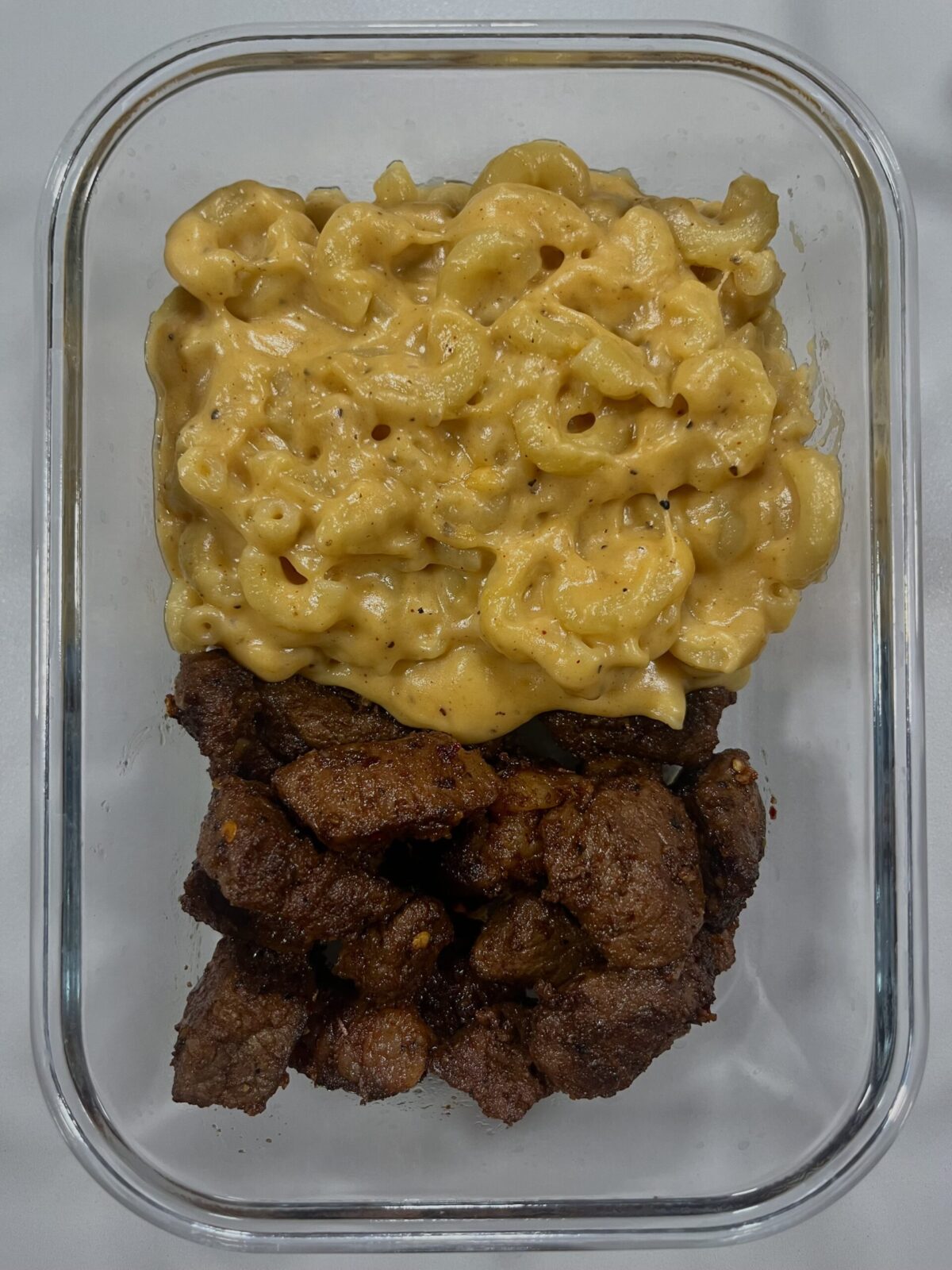
Thaw frozen steak in the refrigerator. Do not rinse raw meat. Cut similarly sized bites for the mac and cheese, or slice strips across the grain for the burrito bowl. Dry the surface and follow the recipe’s seasoning and oil amounts.

At the stove

Use batches so the pieces fit in a single layer. In the mac recipe, let the steak rest off the heat while you finish the sauce, then divide the cooked garlic butter across the servings. In the bowl, keep the tomatoes and chipotle-lime crema in separate cups until after reheating. These are notes from the existing recipes, not a new timing test.

For fresh whole-cut beef steak, USDA’s minimum is 145°F before removing from heat, followed by a 3-minute rest. Check with a food thermometer and follow any package-specific instructions. Recipe minutes and browning are guides, not proof of a safe temperature. USDA beef temperature guidance.

Keep, freeze, reheat

  • Raw: refrigerate at 40°F or below and use within 3-5 days, or freeze. Follow more restrictive package instructions.
  • After cooking: refrigerate within 2 hours, or within 1 hour when the surrounding temperature exceeds 90°F. Divide into shallow containers.
  • For the week: refrigerated leftovers keep 3-4 days. Freeze portions you will not eat in that window; label the cooking date.
  • At lunch: remove cold topping cups. Cover, stir or reposition, and heat leftovers to 165°F throughout. Check several spots in a microwave.

A splash of milk or water helps loosen the mac. The recipes’ microwave intervals are starting points; appliance power, food amount, and starting temperature vary.

USDA raw beef storage · USDA leftover handling

Put the ingredient to work

Two ways to use the same cut.

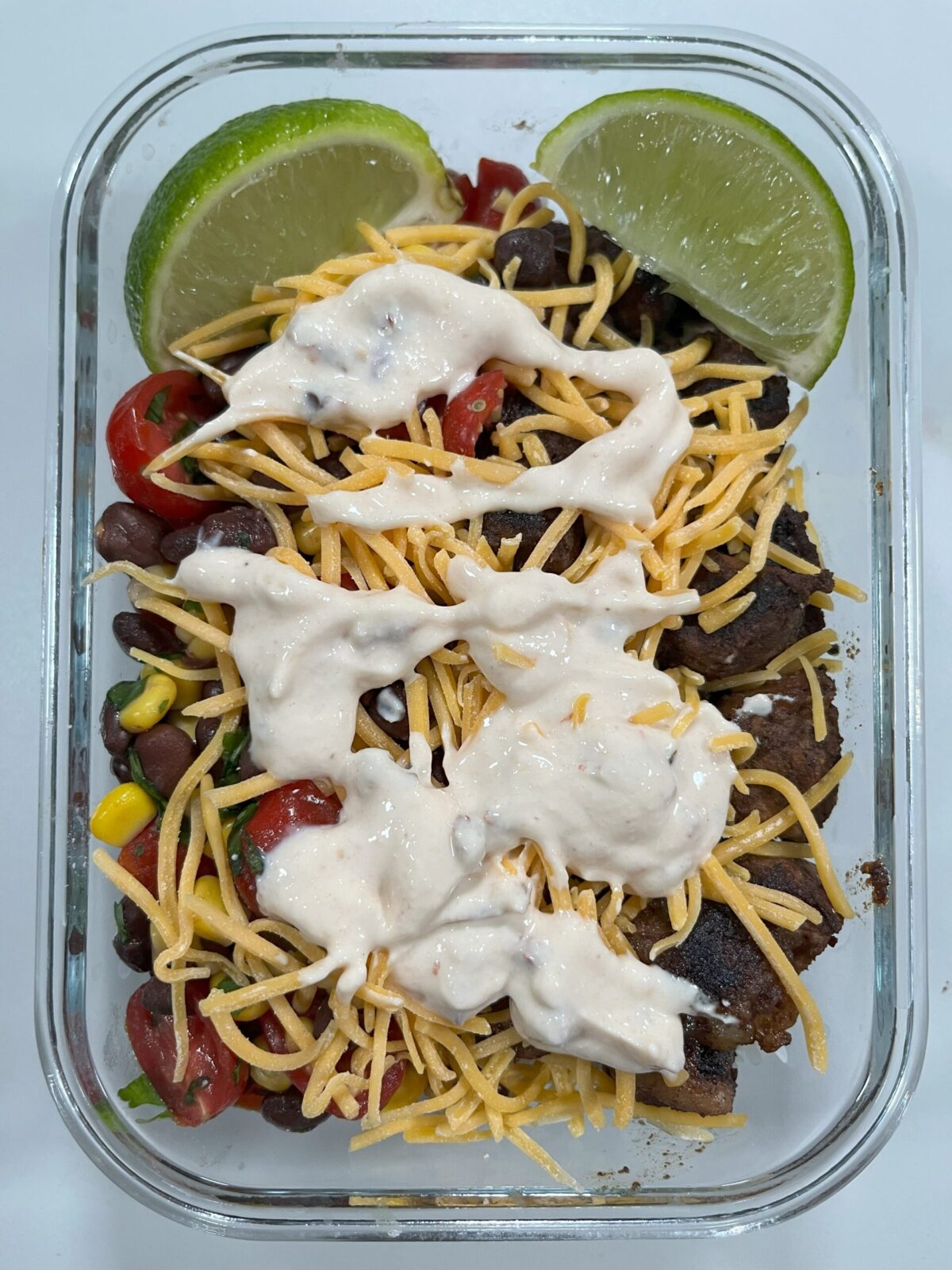
Southwest Steak Burrito Bowl

Rice, beans, and a cold finish

Southwest Steak Burrito Bowl

67.8g protein$9.05 / serving est.45 min

Keep the crema, tomatoes, and cilantro separate from the hot base. Portion the steak deliberately before adding the remaining toppings.

Get the recipe →

Card nutrition and cost describe the full prepared recipe serving, not steak alone. Costs use the ingredient library’s dated baseline.

When the meat case changes your plan

Make a deliberate swap.

Another steak cut?

The Korean Beef Stir Fry lists sirloin, top round, or flank as options. Follow that recipe’s thin, across-the-grain slicing rather than assuming every cut behaves like a thick top-sirloin steak. Prices and nutrition differ.

A bigger fat cap?

Trimming changes usable weight. A cap-on steak is not an exact match to the raw library reference. Choose the cut you want to eat, then account for its actual edible portion and label.

Steak outside the budget?

Choose a complete chicken recipe instead of dropping chicken into untested steak timings. The budget meal-prep collection compares six options with their own nutrition, cost, and instructions.

Keep the assumptions attached

Sources & what to check next.

Guide reviewed October 5, 2026. USDA composition describes the selected food record, not a health outcome. No benefit, diet result, or medical recommendation is inferred from a nutrient amount.

Nutrition sources, retailer examples, and recipe notes

Explore the ingredient library → · Spot a price or source that needs updating?