

Meal Prep
Pasta Primavera
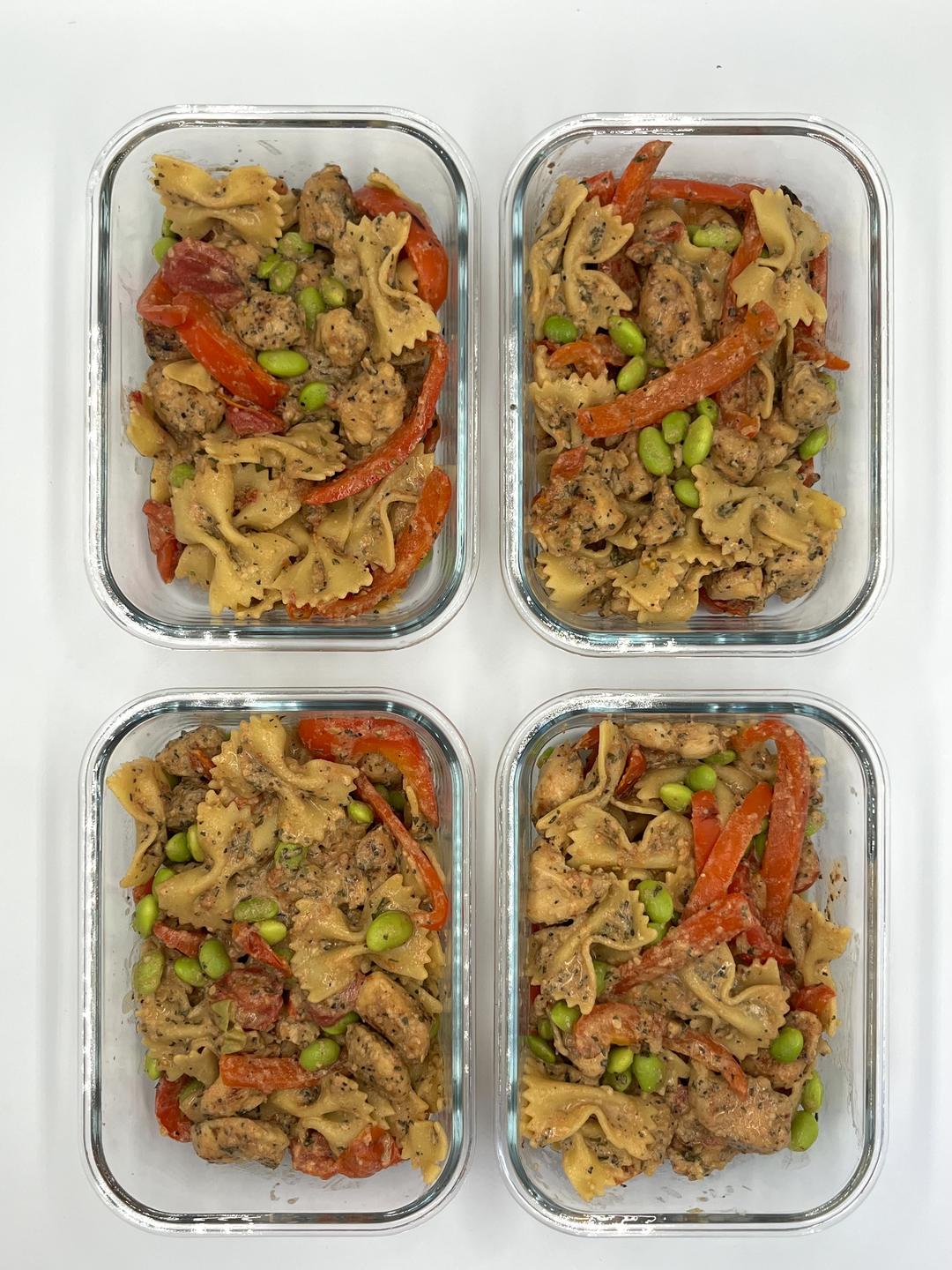
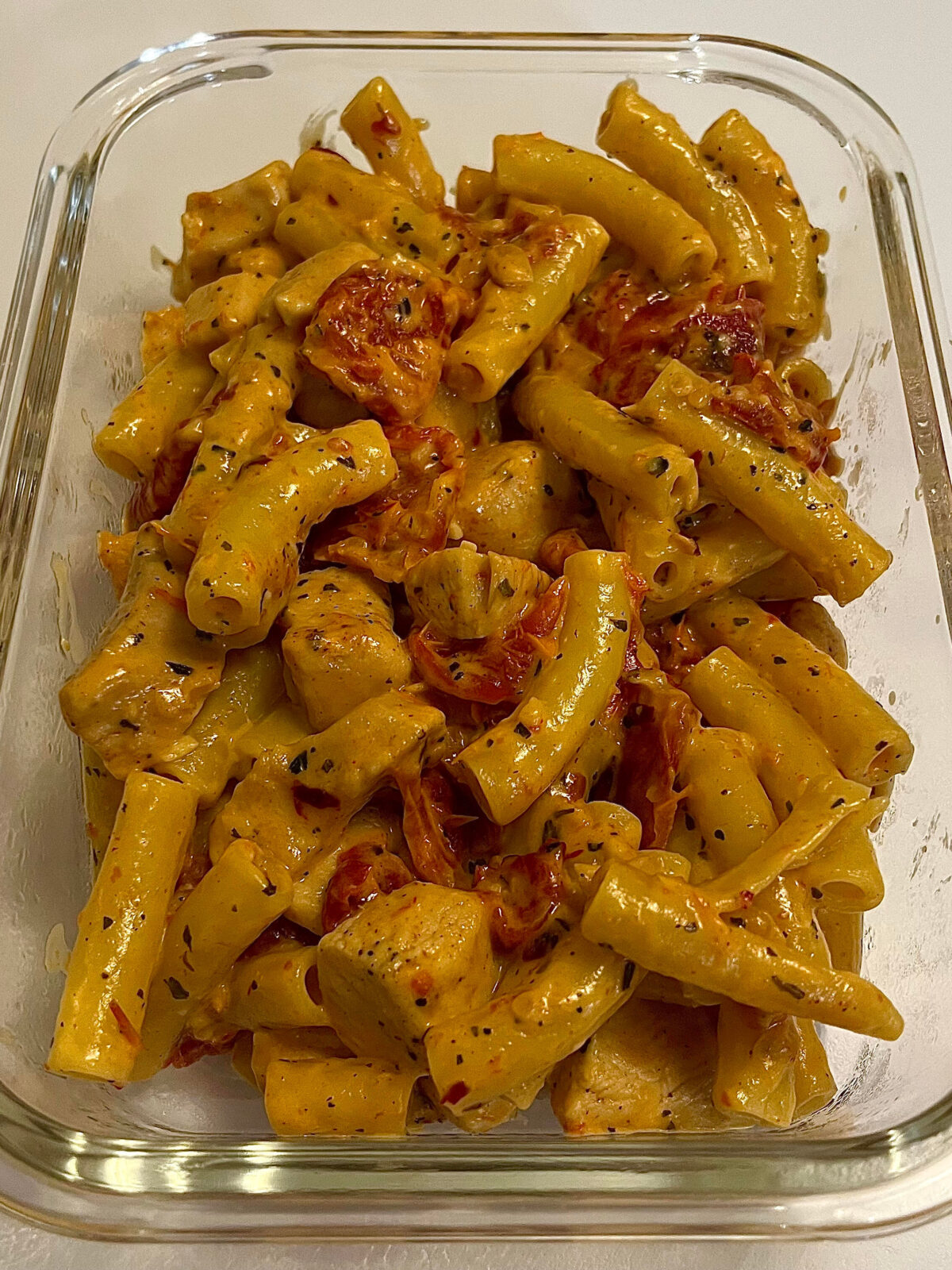
This Chicken Pasta Primavera is clean, bright, and built to perform- tender chicken, crisp veggies, and penne tossed in a light garlic, lemon, and herb sauce that actually lets every ingredient shine. With 53.5g of protein and a low-fat macro profile, it’s the kind of pasta that fuels your week without weighing you down. Simple, balanced, and seriously satisfying- this is meal prep that works as hard as you do.
- Prep
- 20 min
- Cook
- 30 min
- Makes
- 4 servings
- Prep Time
- 20 mins
- Cook Time
- 30 mins
- Total Time
- 50 mins
Equipment
As an Amazon Associate I earn from qualifying purchases.
Ingredients
Ingredient links open Walmart products from our grocery planner. Links marked “Walmart search” need your product choice. Confirm package details and local availability at Walmart.
For the Chicken:
For the Pasta:
For the Vegetables:
For the Sauce:
Instructions
Cook the Pasta:
8 oz penne pasta
Prep the Chicken:
1 ½ lb raw boneless skinless chicken breast, 1 tsp salt, ½ tbsp black pepper, 1 tbsp garlic powder
Cook the Chicken:
1 tsp olive oil spray
Cook the Vegetables:
2 large red bell peppers
1 cup frozen peas
1 ½ cup grape tomatoes, 6 cloves garlic
Build the Sauce:
½ cup low-sodium chicken broth
½ cup half & half, ¼ cup grated Parmesan cheese, 1 tbsp dried basil, ½ tbsp dried parsley, ½ tsp black pepper
Assemble:
⅝ lemons
Serve:
Nutrition
Per servingEstimates for one serving.
- Calories
- 589 kcal
- Protein
- 53.5 g
- Fat
- 12.9 g
- Carbs
- 62.9 g
Full nutrition and how it’s calculated
All values are per serving. Changing the recipe yield scales the ingredients and keeps these per-serving amounts the same.
- Saturated Fat
- 4.76 g
- Polyunsaturated Fat
- 1.73 g
- Monounsaturated Fat
- 3.72 g
- Trans Fat
- 0.22 g
- Cholesterol
- 141 mg
- Sodium
- 865 mg
- Potassium
- 1,240 mg
- Fiber
- 6.6 g
- Sugar
- 9.7 g
- Added Sugar
- 0 g
- Vitamin A
- 250 mcg RAE
- Vitamin C
- 142.95 mg
- Vitamin D
- 0.04 mcg
- Calcium
- 172 mg
- Iron
- 4.5 mg
Estimated ingredient cost
$3.11 per serving · $12.43 for this batch
Ingredient costs and assumptions
Estimated US grocery prices for the amounts used, including purchase waste and discarded marinade. Your store, brands, and package sizes may cost differently. Buying full packages can cost more. Price sources and methodology.
Quantities without exact weights use the nutrition library’s portion estimates. Purchase yields are estimates. Separate citrus ingredients are costed independently; reusing the same fruit for juice and zest can lower your cost. Labor, utilities, and delivery are excluded.
- raw boneless skinless chicken breast: $3.85
680.4 g purchased · Uses the reviewed ingredient quantity before cooking or marinade losses.
Authored ingredient weight. Variable-weight pack priced per pound, raw boneless skinless breast.
Walmart: Freshness Guaranteed Boneless Skinless Chicken Breast · Price checked 2026-09-21
- salt: $0.01
6 g purchased · Uses the reviewed ingredient quantity before cooking or marinade losses.
1 tsp = 6 g Iodized table salt reference; not a kosher salt price.
Walmart: Great Value Iodized Salt · Price checked 2026-09-21
- black pepper: $0.15
3.5 g purchased · Uses the reviewed ingredient quantity before cooking or marinade losses.
1 tbsp (ground) = 6.9 g; texture=ground Ground black pepper reference; cracked pepper may cost differently.
Walmart: Great Value Ground Black Pepper · Price checked 2026-09-21
- garlic powder: $0.11
9.7 g purchased · Uses the reviewed ingredient quantity before cooking or marinade losses.
1 tbsp = 9.7 g Representative product; brand and package size may differ.
Walmart: Great Value Garlic Powder · Price checked 2026-09-21
- olive oil spray: $0.11
4.5 g purchased · Uses the reviewed ingredient quantity before cooking or marinade losses.
1 tsp = 4.5 g Representative product for this ingredient; your brand and package size may differ.
Walmart: Great Value Extra Virgin Olive Oil Cooking Spray, 7 oz Can · Price checked 2026-09-21
- penne pasta: $0.62
226.8 g purchased · Uses the reviewed ingredient quantity before cooking or marinade losses.
Authored ingredient weight. Representative product for this ingredient; your brand and package size may differ.
Walmart: Great Value Penne Pasta, 16 oz · Price checked 2026-09-21
- grape tomatoes: $2.39
228 g purchased · Uses the reviewed ingredient quantity before cooking or marinade losses.
1 cup = 152 g Representative product for this ingredient; your brand and package size may differ.
Walmart: NatureSweet Cherubs Heavenly Grape Tomatoes, 10oz Package, Fresh · Price checked 2026-09-21
- frozen peas: $0.39
134 g purchased · Uses the reviewed ingredient quantity before cooking or marinade losses.
1 cup = 134 g Representative product for this ingredient; your brand and package size may differ.
Walmart: Great Value Sweet Peas, 12 oz (Frozen) Steamable Bag, No Added Sugars · Price checked 2026-09-21
- large red bell peppers: $3.04
360 g purchased · Whole purchased item: 180 g each (estimated); includes shell, peel, or seeds.
1 pepper = 164 g; USDA SR Legacy household weights used as an approximate physical conversion for the current ingredient profile; nutrition remains from its own mapped record. Representative product for this ingredient; your brand and package size may differ.
Walmart: Fresh Red Bell Pepper, Each · Price checked 2026-09-21
- garlic: $0.32
18 g purchased · Uses the reviewed ingredient quantity before cooking or marinade losses.
3 clove = 9 g; USDA SR Legacy household weights used as an approximate physical conversion for the current ingredient profile; nutrition remains from its own mapped record. Representative product for this ingredient; your brand and package size may differ.
Walmart: Spice World Fresh Peeled Garlic, 6 oz, Pouch · Price checked 2026-09-21
- low-sodium chicken broth: $0.20
120 g purchased · Uses the reviewed ingredient quantity before cooking or marinade losses.
1 cup = 240 g Liquid carton treated as 32 US fl oz; stock uses the broth reference where applicable.
Walmart: Great Value Reduced Sodium Gluten-Free Chicken Broth, 32 oz Carton (Shelf-Stable) · Price checked 2026-09-21
- half & half: $0.31
121 g purchased · Uses the reviewed ingredient quantity before cooking or marinade losses.
1 cup = 242 g Representative product for this ingredient; your brand and package size may differ.
Walmart: Great Value Half & Half, 32 fl oz · Price checked 2026-09-21
- grated Parmesan cheese: $0.37
30.4 g purchased · Uses the reviewed ingredient quantity before cooking or marinade losses.
1 tbsp = 7.6 g Shredded Parmesan reference; grated products and brands may differ.
Walmart: Great Value Finely Shredded Parmesan Cheese · Price checked 2026-09-21
- dried basil: $0.10
2.1 g purchased · Uses the reviewed ingredient quantity before cooking or marinade losses.
1 tbsp (leaves) = 2.1 g; texture=leaves Representative product for this ingredient; your brand and package size may differ.
Walmart: Great Value Basil Leaves, 0.8 oz · Price checked 2026-09-21
- dried parsley: $0.08
0.8 g purchased · Uses the reviewed ingredient quantity before cooking or marinade losses.
1 tbsp = 1.6 g Representative product; brand and package size may differ.
Walmart: Great Value Parsley Flakes · Price checked 2026-09-21
- lemons: $0.35
80 g purchased · Whole purchased item: 120 g each (estimated); includes shell, peel, or seeds.
Editorial medium/large edible fruit and juice-yield estimates. Juiced fruit uses 45 g each; the whole-fruit nutrition profile remains an approximate proxy. Representative product for this ingredient; your brand and package size may differ.
Walmart: Fresh Lemons, 2 lb Bag · Price checked 2026-09-21
- black pepper: $0.05
1.2 g purchased · Uses the reviewed ingredient quantity before cooking or marinade losses.
1 tsp (ground) = 2.3 g; texture=ground Ground black pepper reference; cracked pepper may cost differently.
Walmart: Great Value Ground Black Pepper · Price checked 2026-09-21
Make it yoursRecipe notes & meal-prep tips
Macro breakdown
- Protein53.5g37%
- Carbs62.9g43%
- Fat12.9g20%
Per serving · Share of calories from macros
Calculated using 4 calories per gram of protein and carbs, and 9 for fat. Rounding and fiber can affect the listed calorie total.Triple B's Meal Prep Notes
This primavera includes chicken, peas, peppers, and tomatoes, so mix from the bottom when you portion it. Small peas tend to settle while the larger chicken and pepper pieces stay near the surface. A thorough toss before each scoop helps every container feel like the same meal rather than four different versions of it.
The vegetables go into the skillet in stages: peppers first, then peas, then tomatoes and garlic. Keep that order so the tomatoes do not completely collapse while the peppers are still firm. The broth, half-and-half, Parmesan, and lemon make a light coating compared with some of the richer pasta meal preps, so reserve pasta water before draining and use it to help the sauce reach the whole batch. Drain the pasta with some bite remaining so the sauce and microwave do not turn the whole batch soft. Keep that first pepper stage short and leave some bite in the pieces. They will soften further in the pasta sauce and again when the serving is reheated.
For a refrigerated serving, microwave on high for 90 seconds, stir, then heat for another 45 seconds. Use that as a starting point and continue in short intervals as needed until the food reaches 165°F throughout. Gently lift the penne and chicken through the sauce at the pause, adding a small splash of water if needed. Fresh basil and extra Parmesan can go on afterward if you use them. Vegetable swaps are possible, but cook them according to their own needs rather than assuming everything belongs in the same short stage. For more meals with a generous vegetable component, browse the high-fiber recipes. The chicken archive and Italian-inspired collection offer other sauce directions.



Notes from your kitchen
Tried it? Tell us how it went.
Leave a rating and tell us how it turned out. Swaps, tips, and questions welcome.
From the community
I built this because I wanted a Springtime pasta that didn’t feel like a compromise. This one proved that “lighter” doesn’t have to mean boring or forgettable. Curious if this fits your rotation the way it fit mine!